Your extended engineering team.

The expertise, resources, and execution you need. Without the overhead of building a larger team.
Engineering+ by Walt 3D

Engineering+ is an outsourced engineering and product development partnership that gives companies access to the resources, expertise, and execution capabilities they need to design, develop, improve, and manufacture nearly anything — without the overhead of building a full in-house team.

Rather than hiring a full-time engineer, designer, or manufacturing specialist; every time a need arises, a company can use Engineering+ as an extension of its existing team. Walt 3D provides ongoing access to engineering resources, technical knowledge, design capabilities, project coordination, prototyping, and manufacturing support through one monthly partnership.

The goal is to become more than a vendor who completes individual projects. Engineering+ becomes a dependable resource that understands the client’s products, business, priorities, and technical challenges — and helps move work forward continuously. While eliminating the need to hire additional inhouse resources. 

Traditional Approach vs. Engineering+
Traditional ApproachEngineering+ Approach
Hire a full-time employee for a single, fixed skill set.Access diverse engineering resources tailored to current project needs.
Pay fixed salaries and benefits regardless of fluctuating workload.Pay a predictable monthly subscription mapped to defined capacity.
Recruit and interview separately for different technical capabilities.Gain immediate access to a broad network of design and manufacturing expertise.
Manage and coordinate multiple independent vendors and machine shops.Streamline all development through one primary engineering partner.
Lose time onboarding and briefing a new vendor for every project.Build long-term continuity and accumulated product knowledge.

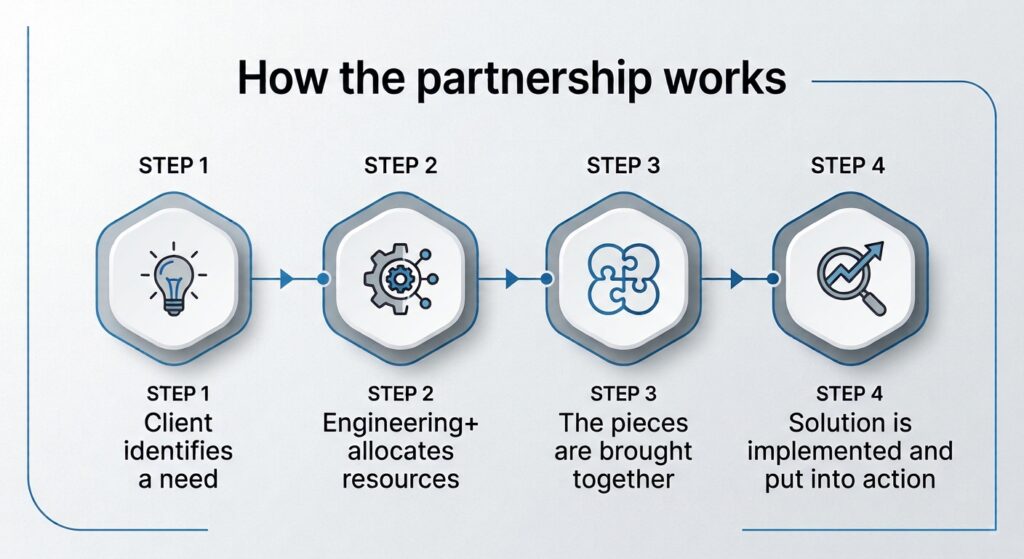
 The Process

  1. The client identifies a need. It could be a new product, an engineering backlog, a drawing revision, a design problem, a manufacturing challenge, assistance selecting a material, the need to create prototypes or nearly any other closely related engineering problem. 

  2. Engineering+ allocates the resources. Walt 3D applies the appropriate engineering knowledge, design capabilities, project coordination, and outside manufacturing resources needed for the work.

  3. Work progresses collaboratively, and the pieces are brought together.  Instead of starting from scratch with a new vendor for every task, the client has a consistent partner that learns its products and requirements.

  4. A solution is implemented and the next item is worked on. The client implements solutions quickly. Monthly plans provide a defined level of engineering capacity, with approved additional work and prototype or production costs quoted separately.
Explore Our Offerings:

Engineering+ Essential

$5,000 / month

Your on-demand engineering resource.

Get reliable access to engineering, design, and technical expertise without the expense of hiring a full-time employee.

What’s Included

  • CAD design, modeling, and modifications
  • 2D manufacturing, assembly, and technical drawings
  • Basic product and component design
  • Engineering revisions and documentation
  • Bill of materials (BOM) preparation
  • Design-for-manufacturability (DFM) reviews
  • Material and manufacturing process recommendations
  • Supplier research and quotation coordination
  • Technical problem-solving support
  • Weekly progress updates
 

Monthly Capacity: Up to 30 hours of engineering and project support. Only one open project or task at a time.

Ideal For: Businesses that need dependable engineering support for day-to-day tasks, design revisions, and smaller projects.
Engineering+ Growth (Recommended)

$7,500 / month

Your extended engineering team.

Expand your capabilities, accelerate product development, and manage a growing engineering workload without expanding your internal headcount.

Everything in Essential, Plus:

  • New product and component development
  • Complex CAD assemblies and design iterations
  • Advanced DFM and design optimization
  • Cost-reduction and material substitution initiatives
  • Engineering change management
  • Design-related manufacturing problem investigation
  • Prototype planning and coordination
  • Supplier identification and qualification support
  • Manufacturing quotation collection and comparison
  • Production-readiness reviews
  • Proactive engineering and cost-saving recommendations
  • Priority scheduling
  • Twice-monthly project reviews
 

Monthly Capacity: Up to 50 hours of engineering and project support. Up to 2 total tasks/projects being worked on at a time independently of each other. 

Ideal For: Growing businesses with ongoing product development, multiple projects, or internal teams that need additional technical capacity.

Engineering+ Strategic

$10,000 / month

Your outsourced engineering department.

Gain a long-term engineering partner to coordinate complex projects, support manufacturing operations, and help drive product development forward.

Everything in Growth, Plus:

  • Support across multiple products and concurrent projects
  • Complex engineering program coordination
  • Product and design standardization
  • Production scale-up and manufacturing transition support
  • Ongoing supplier technical coordination
  • Supplier quality issue tracking and defect investigations
  • Manufacturing process improvement initiatives
  • Production handoff and technical documentation
  • Dedicated account and project lead
  • Monthly engineering roadmap and capacity planning
  • Project risk, workload, and status reporting
  • Highest-priority scheduling
  • Regular management and strategy reviews
 

Monthly Capacity: Up to 70 hours of engineering and project support. Up to 3 total tasks/projects being worked on at a time independently of each other. 

Ideal For: Established businesses seeking a comprehensive, ongoing engineering partnership to support multiple products, technical initiatives, and manufacturing operations.
Engineering+ Plan Comparison

FeatureEssentialGrowthStrategic
Monthly Cost$5,000$7,500$10,000
Included Hours / Month30 hours50 hours70 hours
Effective Hourly Rate$167/hr$150/hr$143/hr
CAD Design & Engineering✓✓✓
Technical Drawings & Documentation✓✓✓
Product DevelopmentBasicAdvancedComplex / Multi-Project
Design Optimization & Cost ReductionBasicAdvancedOngoing
Prototyping & Manufacturing SupportBasic CoordinationExpanded SupportComprehensive Coordination
Supplier Sourcing & CoordinationBasicExpandedOngoing
Project ManagementStandardEnhancedDedicated Lead
Progress & Strategy ReviewsMonthlyTwice MonthlyRegular Management Reviews
Scheduling PriorityStandardPriorityHighest Priority
Additional Engineering Hours$200/hr$200/hr$200/hr

All plans include: Ongoing access to engineering, design, technical expertise, and manufacturing support without the overhead of hiring additional full-time employees.

Additional costs: Physical prototypes, production runs, tooling, materials, shipping, and specialized testing are quoted separately.

Capacity policy: Unused hours do not roll over. Additional work requires client approval before exceeding the included monthly allocation.

Ready to Extend Your Engineering Capabilities?

Let’s discuss your goals, identify where Engineering+ can add value, and build a partnership that grows with your business, all without the overhead of expanding your in-house team.

Your next breakthrough starts here.
Packaging Solutions

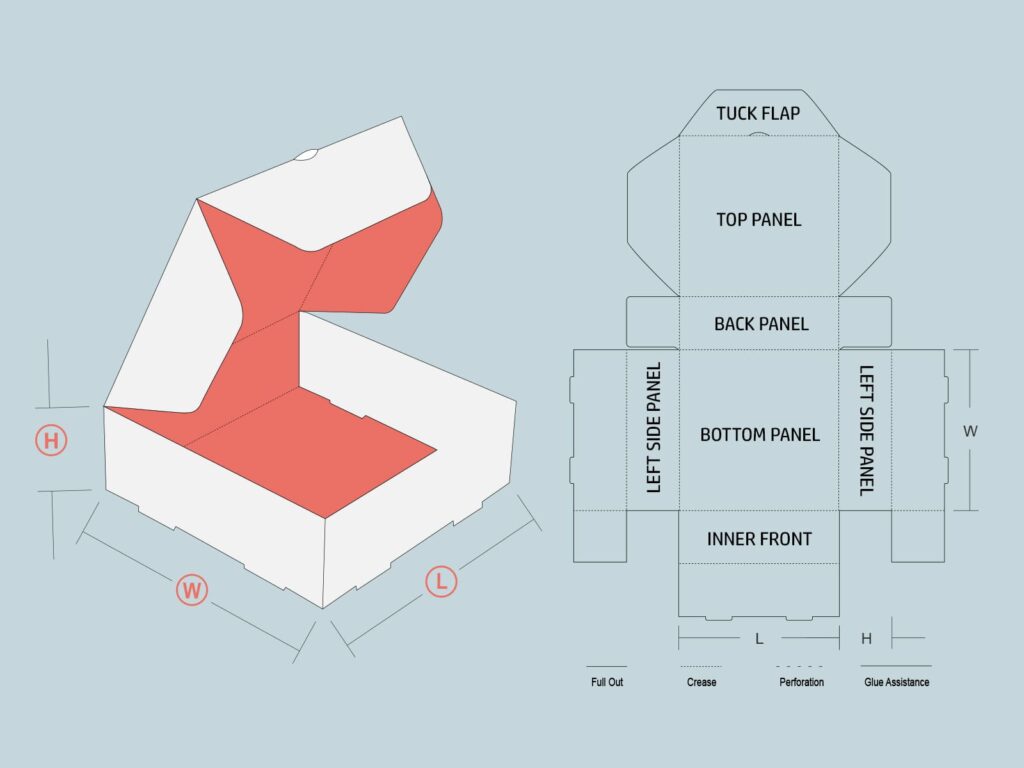
Packaging design or product packaging design refers to the creation of the exterior of a product, but can also refer to the interior components that stop parts from moving around or rattling during transport. Looks are often times just as important as function and when both are combined in a unique way, great things can occur. The result is a product presentation that looks good and protects the parts inside. 

Packaging is used very loosely as there are a lot of types of packaging and applications that we can assist with. When it comes to packaging Walt 3D can assist in the design, prototype making and production of packaging made from cardboard, foam and plastics. 

CNC Wood Routing

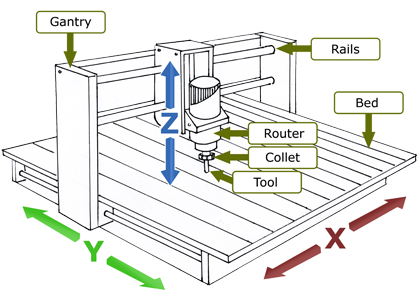
A CNC router is a type of computer controlled machine created for milling, drilling and cutting materials. CNC routers are similar to milling machines, with some of them capable of performing almost the same tasks. The main functions are to cut, engrave and carve objects out of a work piece, essentially a replacement for the usual hand-held router. By introducing computer control to the process, the number of errors is drastically reduced.

Manufacturing: Concrete

Concrete is the second most-used substance in the world after water. This is a very amazing fact about this material that many overlook. Concrete is similar to metal and plastic in that it can be extruded and cast into a variety of shapes. 

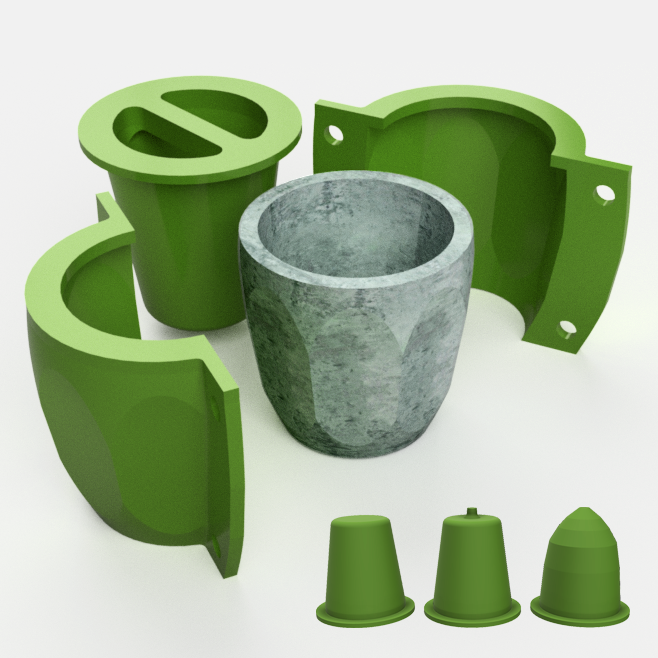
While we do not offer concrete parts production, we are able to provide complimentary parts and accessories for the concrete industry. Parts and materials that we are able to make are profiles for concrete extrusion, molds for casting parts, and stamping patterns when finishing the surface of concrete pours. There are likely many more ways in which our design and production capabilities can be used in the concrete industry. 

Carbon Fiber Processing

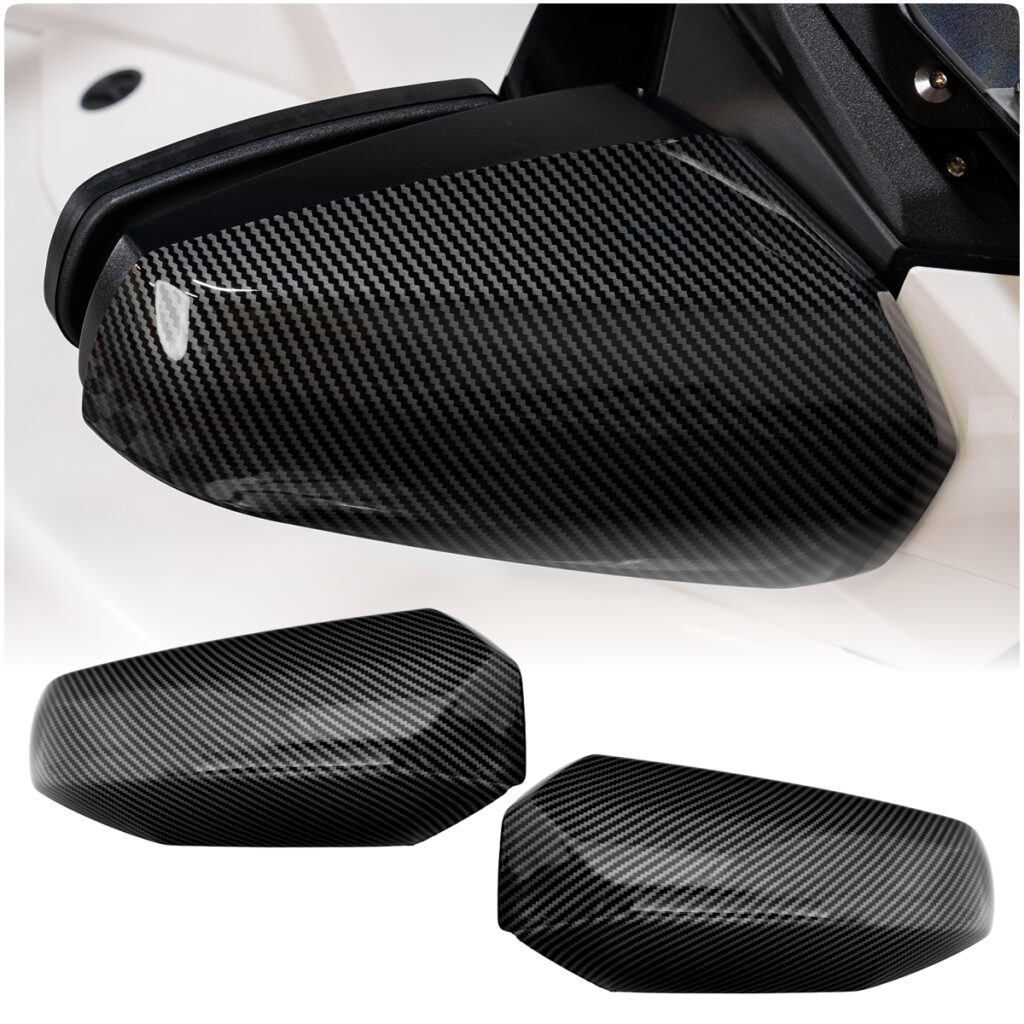
Carbon fiber is a high-performance material with a wide range of uses in manufacturing. It is lightweight with high stiffness and tensile strength, and low thermal expansion. At Walt 3D we are able to provide design and production assistance for the manufacturing and processing of carbon fiber parts. There are a multitude of techniques for producing parts made from carbon fiber and we have the knowledge and resources to produce these parts from a variety of these methods. 

In general there are three main ways to process carbon fiber parts which include: Wet Lay-up, Prepreg Lamination and Resin Transfer molding. Keep in mind carbon fiber parts can also be CNC machined by cutting flat sheets, and even produced in extruded profiles.

Plastic: 3D Printing

While 3D Printing is generally used during the design and prototype making stages, it is sometimes necessary to produce production parts via this process. 3D printing is often the right manufacturing process for parts that are very low production volume, need to be produced in a short period of time or have very complex geometry not suitable for traditional manufacturing processes. 

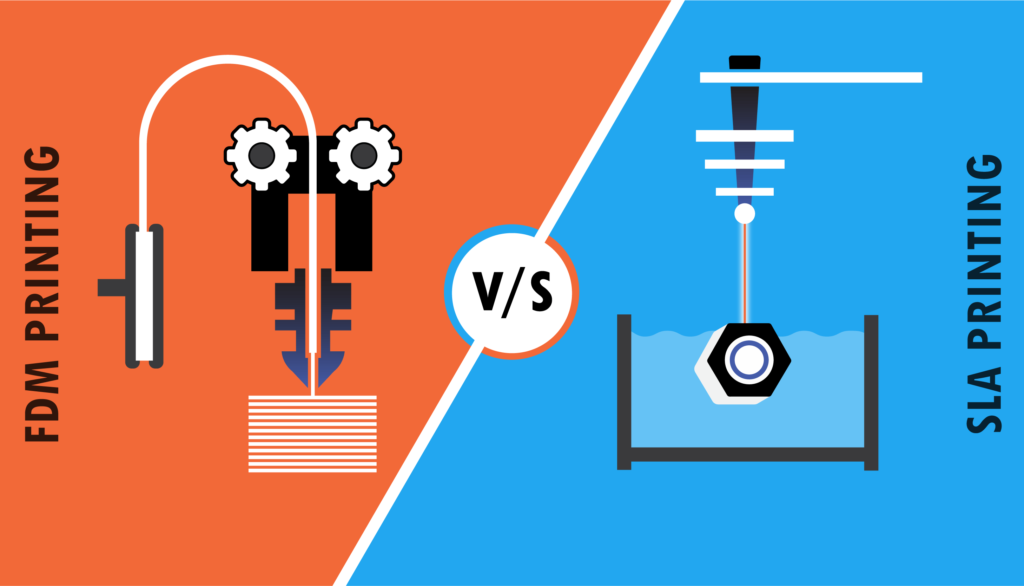
The two main types of 3D printing we work with are FDM 3D printing, the traditional filament on a spool, and SLA 3D printing, also known as resin 3D printing. Each process has its unique pros and cons. To learn more about what process might be right for your project feel free to contact us!

Plastic: Liquid Injection

Liquid injection molding (LIM) is a fabrication process  that uses special molds and injection molding machines to form liquid silicone materials into a broad range of components and products. Unlike the common reaction injection molding process that relies on pressurized impingement mixing, liquid injection molding uses a metered mechanical mixing process that is used primarily with liquid silicone rubber (LSR) and similar liquid-state elastomeric materials. These parts can be used in a variety of applications and offer exceptional part clarity when making clear parts.

Plastic: Over Molding

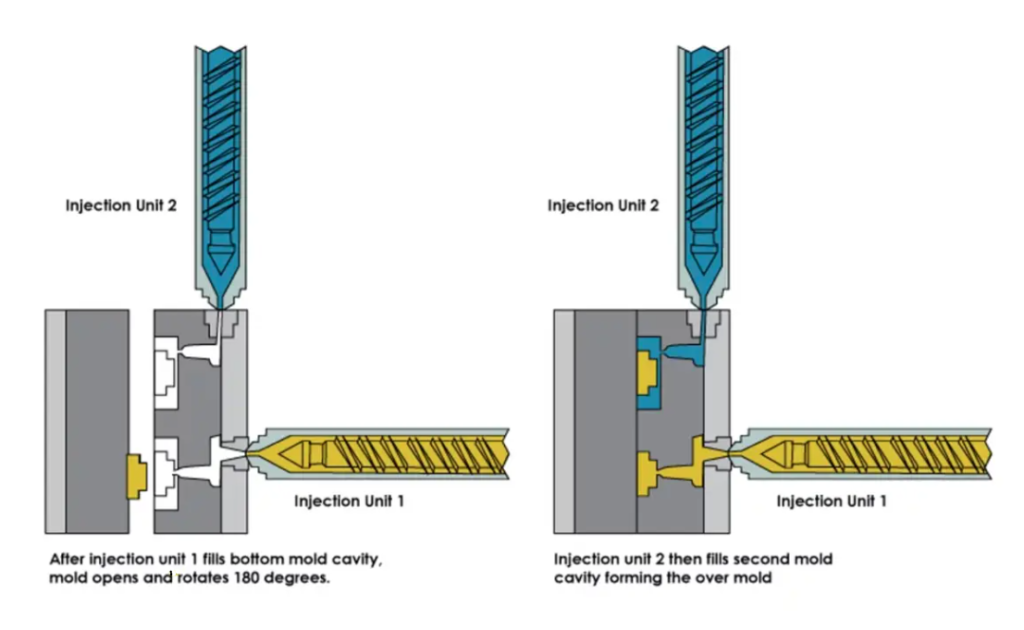
First, a base component (otherwise known as a substrate) is molded and allowed to cure. Overmolded substrates are often made of plastic. Then, a second layer is molded directly on top of the first to create a single solid piece. Overmolding is commonly used to manufacture plastic parts that feature a rubber handle. The two-shot process of over molding a toothbrush, for example, consists of forming a base layer for the plastic handle and a top layer of rubber (to make the toothbrush less slippery to hold).

Plastic: Compression Molding

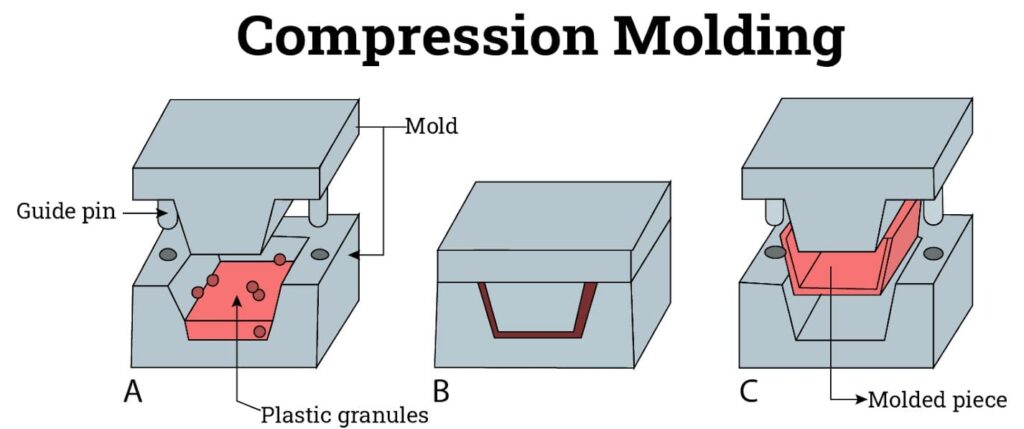
Compression molding and injection molding are very similar, but they have one major difference. In compression molding, molds are closed around the charge, and in injection molding, the charge is injected into a closed mold cavity.

Compression molding produces parts by placing a pre-measured amount of material into a mold, closing the tool, and applying heat and pressure. This pre-measured material is called a charge or load, and the mold is usually pre-heated so that the material flows more readily and fills the tool as it’s compressed. When molding is complete, the part is cooled, ejected, and trimmed or de-flashed.

Plastic: Laser + Water Cutting

Both waterjet cutting and laser cutting are CNC controlled. Both are highly versatile and offer a high rate of accuracy and precision. They produce minimal waste, offer quick delivery, and are high-quality due to advanced software and superior equipment.  Both processes are ideal for a wide number of industries including the aerospace, architecture, automotive, manufacturing, medical science, and power industries. 

Waterjet cutting is generally the first choice when working with thicker and harder materials due to its high-pressure capacity. On the other hand, laser cutting is generally faster than waterjet cutting and offers a higher rate of precision. Laser cutting is the more cost-efficient option and is capable of cutting parts faster than waterjet cutting. In addition, a laser cutting machine is capable of cutting as well as engraving material; a waterjet only allows cutting. 


Plastic: CNC Machining

Plastic machining is one of the most common industrial processes due to the high usage of this material. However, modern-day plastic CNC machining isn’t what it used to be. Plastics nowadays can be built strong enough to stop a bullet’s impact. This calls for a very rugged machining method.

CNC machining plastics has become a great solution for these requirements. Plastics have a lot of variety, with differences in physical properties and chemical structure. All of these varieties are easy to machine with CNC machining.

Plastic: Polymer Casting

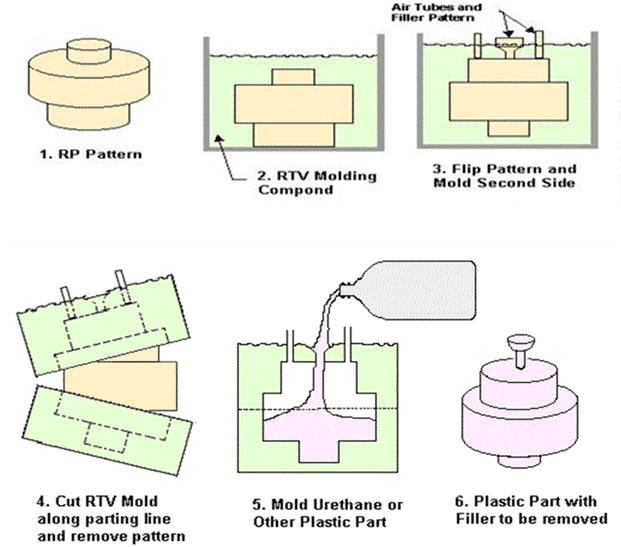
Resin and Polymer casting is a manufacturing process used to make copies of 3D objects or parts already in existence. The way this process works is that a mold is made, generally from a silicone material using the part being copied. Once the mold is made resins and polymers can then be poured into the mold making exact copies of the original part. Often times the process is great for making exact copies of 3D printed parts. Generally this process is used for low production and prototyping of parts.

Plastic: Rotational Molding

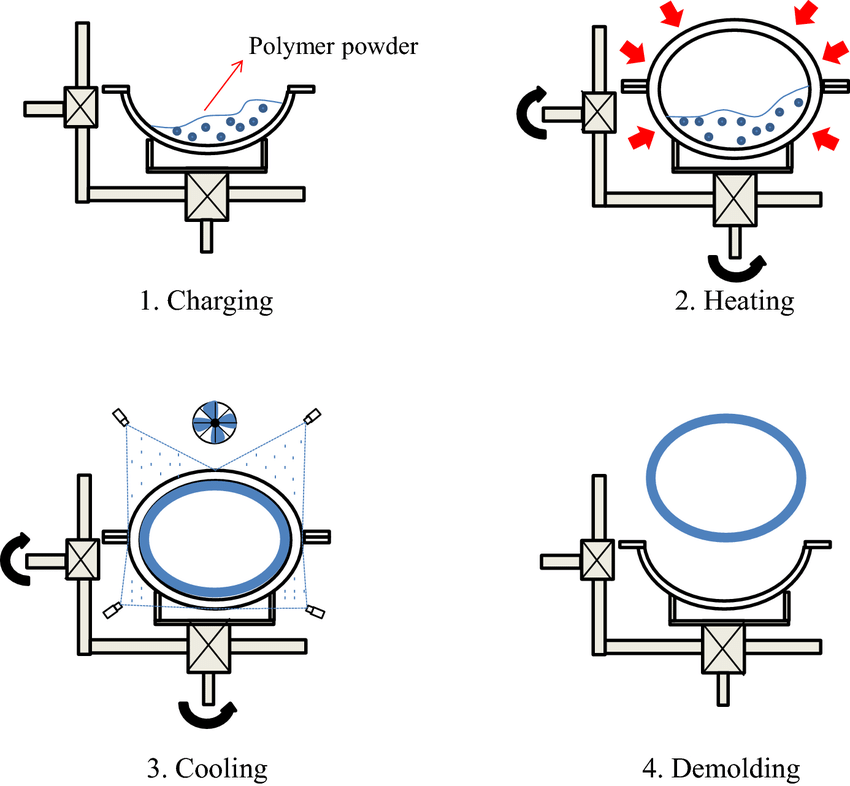
Rotational molding is the manufacturing process to form hollow cavity parts in all shapes and sizes. This is a cost-effective method to produce large hollow polymer parts. Polymers are added into a mold that’s heated and rotated slowly. The simultaneous heating and rotation distributes and fuses the resin on the inner surfaces of the mold. The result is a product that contains seamless parts with a uniform wall thickness with more material in corners to absorb shocks and stresses where they occur most.

With roto molding the part design has the freedom to be just about any shape and size. There is almost no limit to the size of moldings and there are literally thousands of applications.

Plastic: Thermo Forming

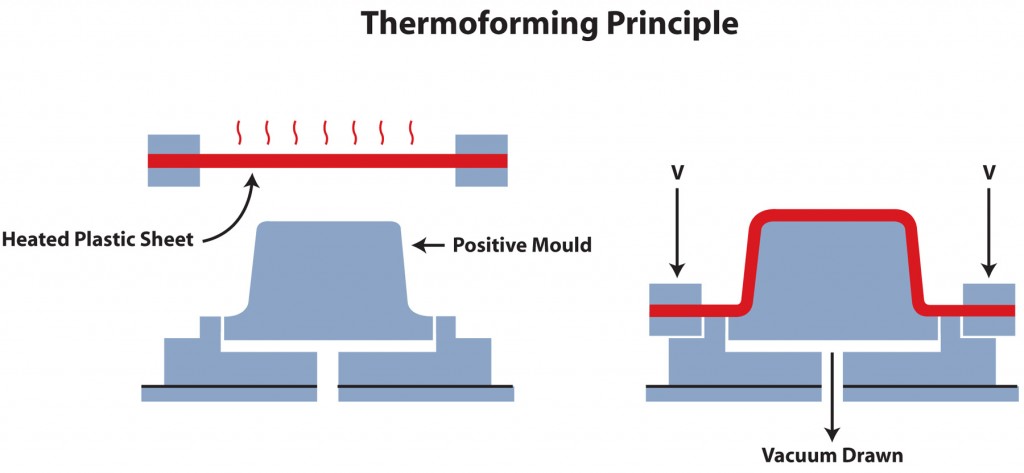
Thermoforming is the method of weakening a sheet of plastic by heating it to a certain temperature. The sheet is extended and controlled across a single-sided mold. Then it cools to its final shape. Vacuum-forming and pressure-forming are the most popular ways of getting the sheet to bend to its ultimate shape. 

Thermoforming can be utilized in a variety of sectors and has a wide range of applications. The adaptability of thermoforming is one of its best features. This is seen in the wide range of materials that can be utilized in the procedure. Each material is ideally suited to certain applications and uses.

Plastic: Blow Molding

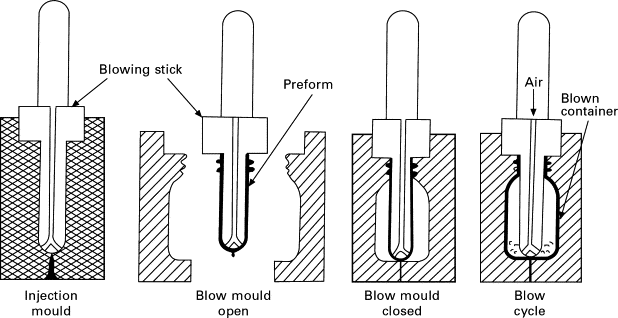
Blow molding is the manufacturing process that allows resins, plastics and polymers to be formed into shapes with hollow and internal cavities that a mold would not be able to be removed from. This process is most commonly seen in plastic bottles. The process works by placing a small preform or tube onto a nozzle like end that then heats the preform, at the same time air is blown into the preform and it expands the heated material to the shape of the surrounding mold.

Plastic: Extrusion

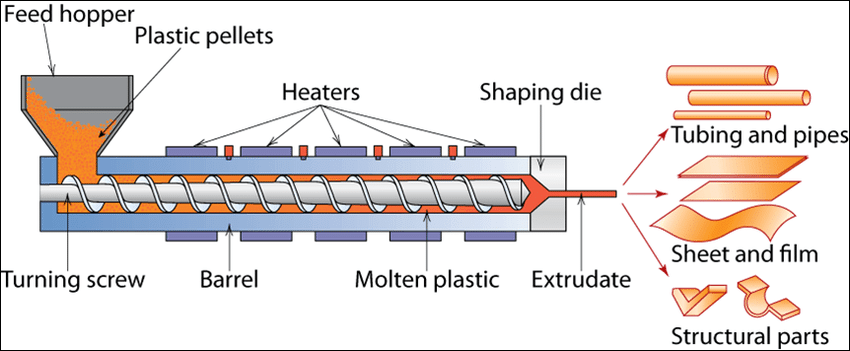
Plastic extrusion molding is a manufacturing process that allows resins, plastics and polymers to be formed into 2D profiles in specified lengths. The way this process works is that granules of raw material are fed through a screw feed system where they are heated, causing them to melt and at the same time are subject to hi-pressure. Once heated and under pressure the molten material is pushed through a die, forming the material to the shape of the die. The extrusions that are created can then be cut to various lengths and secondary finishes completed if required. 

Extrusion produces items such as pipe/tubing, weatherstripping, fencing, deck railings, window frames, plastic films and sheeting, thermoplastic coatings, and wire insulation.

Plastic: Injection Molding

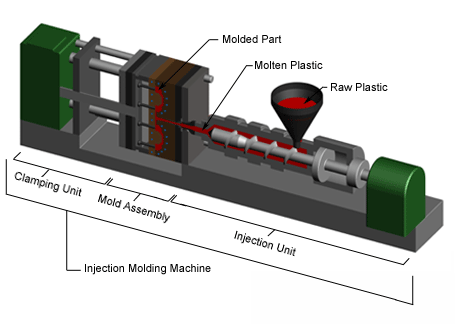
Plastic injection molding is the most commonly used manufacturing process for the production of small, medium, and large-sized plastic parts. The process utilizes an injection molding machine, raw plastic material, and a mold. The plastic is melted to molten by heating in the machine and then injected into the mold, where it cools and solidifies into the final part.

An injection molding machine is made up of a material hopper, barrel, an injection ram/rotating screw, heating device, moveable pattern, ejectors, and mold inside the mold cavity. Generally, machines work in a horizontal manner.

Metal: Injection Molding

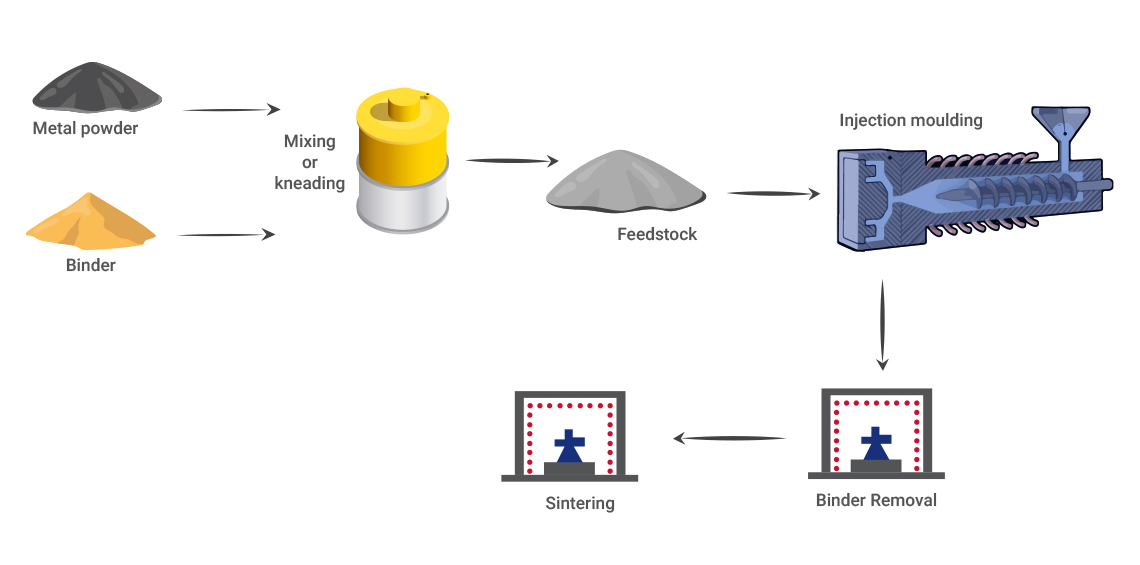
Metal Injection Molding (MIM) is a variation on traditional plastic injection molding that enables the fabrication of solid metal parts utilizing injection molding technology. In this process, the raw material, referred to as the feedstock, is a powder mixture of metal and polymer. Using a standard injection molding machine, the powder is melted and injected into a mold, where it cools and solidifies into the shape of the desired part. Subsequent heating processes remove the unwanted polymer and produce a high-density metal part.

Metal injection molding is best suited for the high-volume production of small metal parts. As with injection molding, these parts may be geometrically complex and have thin walls and fine details. Also, because the metal is not melted in the MIM process (unlike metal casting processes), high temperature alloys can be used without any negative affect on tool life.

Metal: Casting

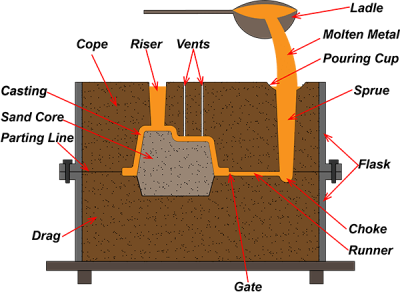
Metal casting is a modern process with ancient roots. In the metal casting process, metal parts are produced by pouring molten metal into a mold cavity, either made from a die or sand. In the mold the molten metal then cools and hardens in the shape of the mold and is later extracted. Metal casting is arguably the earliest and most influential industrial process in history. It’s used to make many of the metal objects used in our daily lives: automotive parts, train wheels, lamp posts and much more. Die casting is better suited for larger quantities of parts while sand casting is usually for smaller production runs.


Metal: Bending

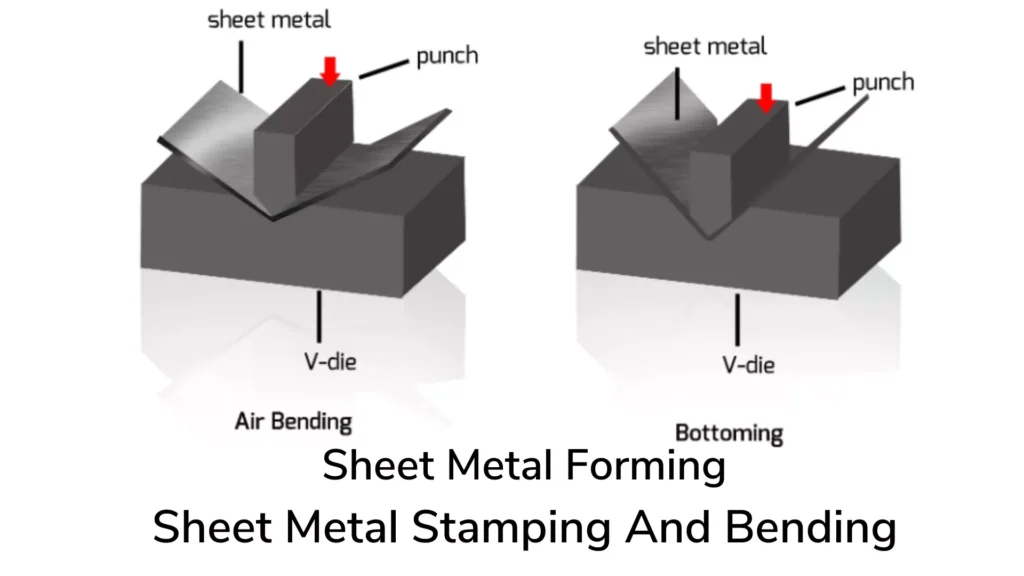
Metal bending is a process by which metal can be deformed when applying force or pressure to the subject, which causes it to bend at an angle and form the desired shape. The bending or shaping usually results in their being a ‘V’ or a ‘U’ shape where the bend is. The shaping is usually to a specific degree and there can be multiple bends in one part. One of the most common places metal bending can be seen is in metal enclosures for computers and electronics.

Metal: Laser Cutting

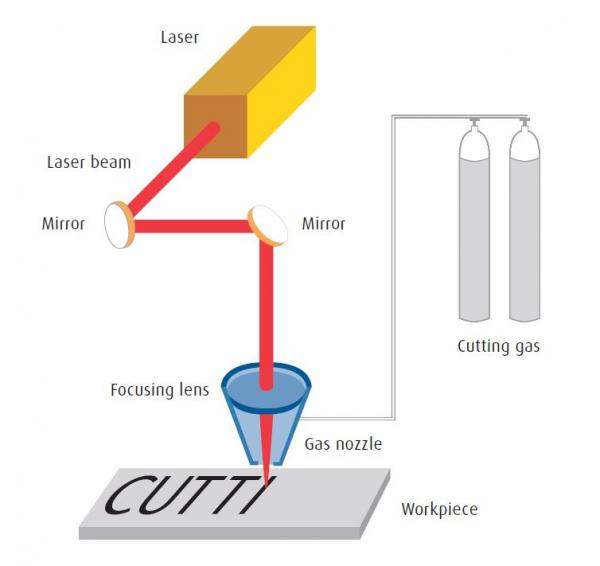
Metal laser cutting is a process which works by having a focused and precise laser beam trace trace an outline on the material that you are looking to cut, delivering an accurate and smooth finish. Initially, the beam pierces the material with a hole at the edge, and then the beam continues to cut by moving the beam precisely using CNC guidance. The laser essentially melts the material away that it is passing over. In this instance it is more like melting rather than cutting. This means laser cutting can easily cut light materials such as cloth up to tougher metals and gemstone. Once programmed, parts can be cut in a matter of seconds, much faster than the alternative methods of plasma or waterjet cutting.

Metal: Water Jet Cutting

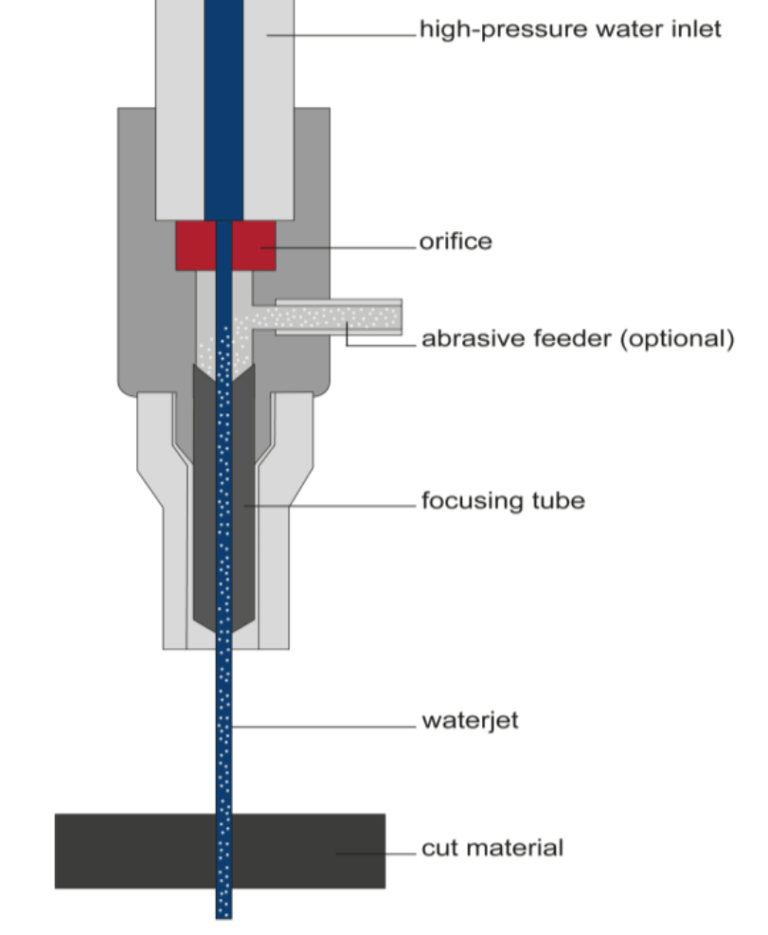
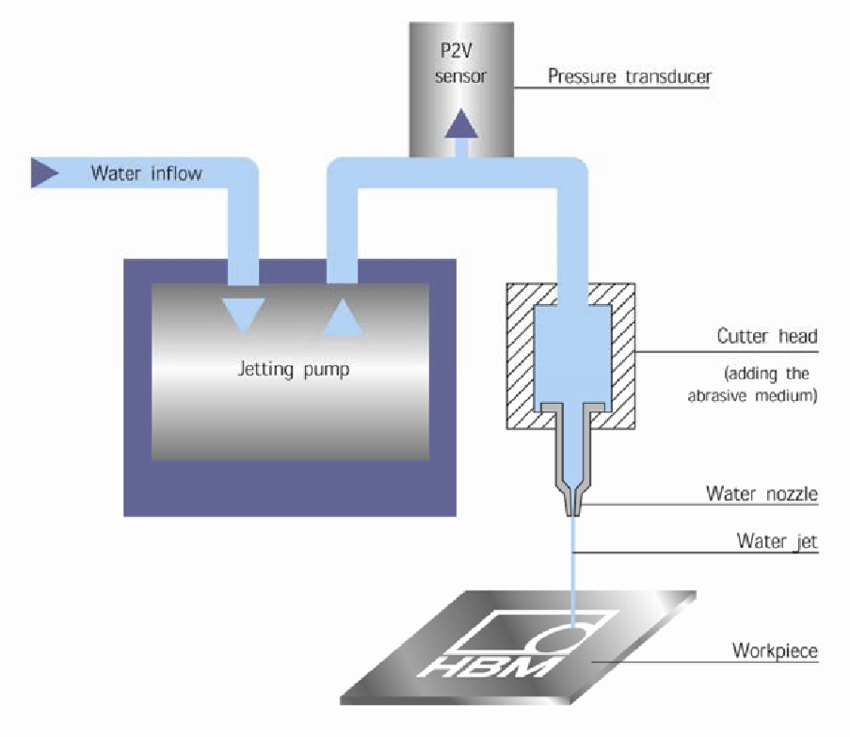
Water Jet cutting uses an ultra-high pressure stream of water to cut through a variety of materials. There are two main types of water jet cutting, pure water jet cutting and abrasive water jet cutting. In pure water jet cutting only pressurized water is used to cut materials.  In abrasive water jet cutting, a gritty abrasive is added to the pressurized stream. The abrasive does the cutting through a mechanical sawing action, leaving a smooth, precision cut surface. Water jet cutting is one of the most versatile processes, because it is able to cut almost any type of material and the cost of material and setup is usually very minimal.

Waterjet machines cut all types of metals: hardened tool steel, aluminum, titanium, and a host of exotic metals that prove difficult to cut with other tools or processes. Cutting with a waterjet produces a smooth edge with no burn marks, cracking or excess burrs. In addition, since waterjet is a cold cutting method, there are no heat-affected zones.

Metal: Stamping

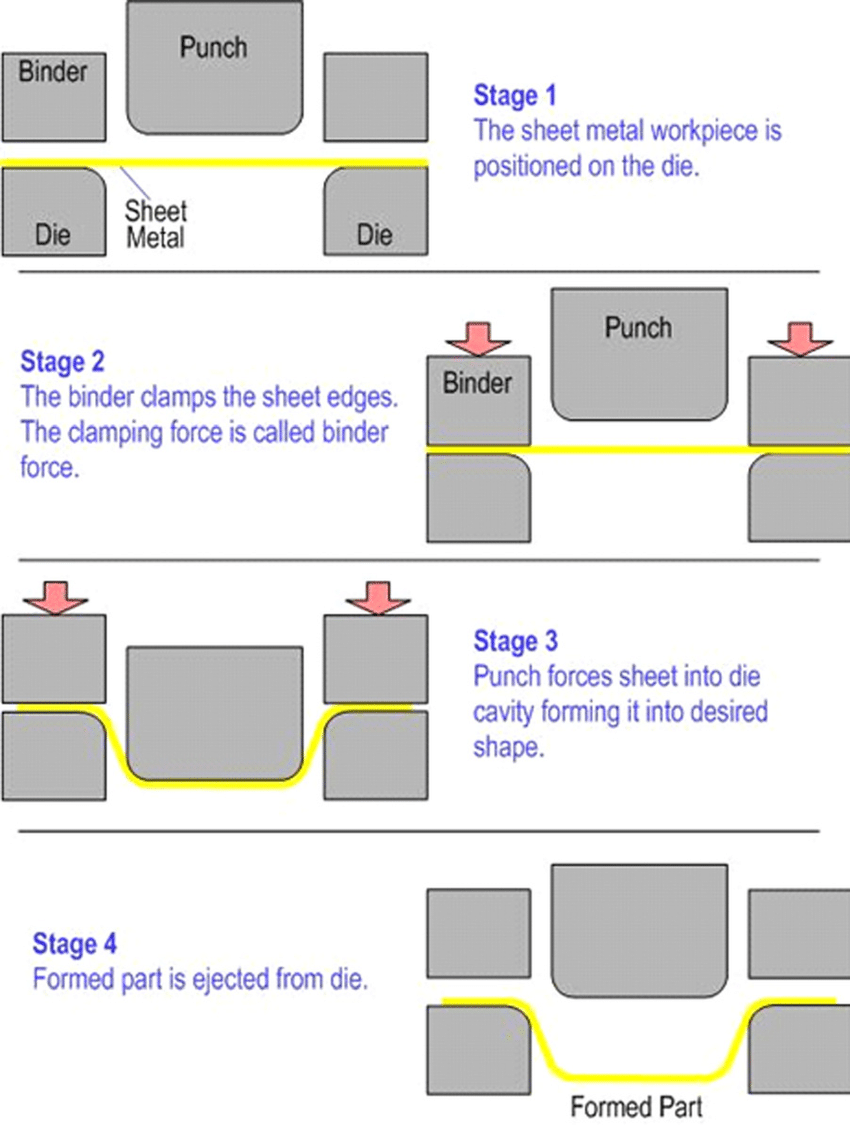
Metal stamping is a manufacturing process that involves the use of an industrial machine to deform/press a flat sheet of metal into a specific shape. Using pressure, the machine presses the sheet of material against a die surface. This changes the shape of the sheet metal to reflect that of the die surface, producing the desired part shape.

Metal stamping is an incredibly versatile and efficient manufacturing process that takes flat metal sheets or coils and transforms them into precisely shaped and intricate parts. By utilizing force, pressure, and specialized tooling, components with diverse forms — including bends, curves, cutouts, and embossing, are possible. This process offers low costs and dimensional stability

Metal: Extrusion

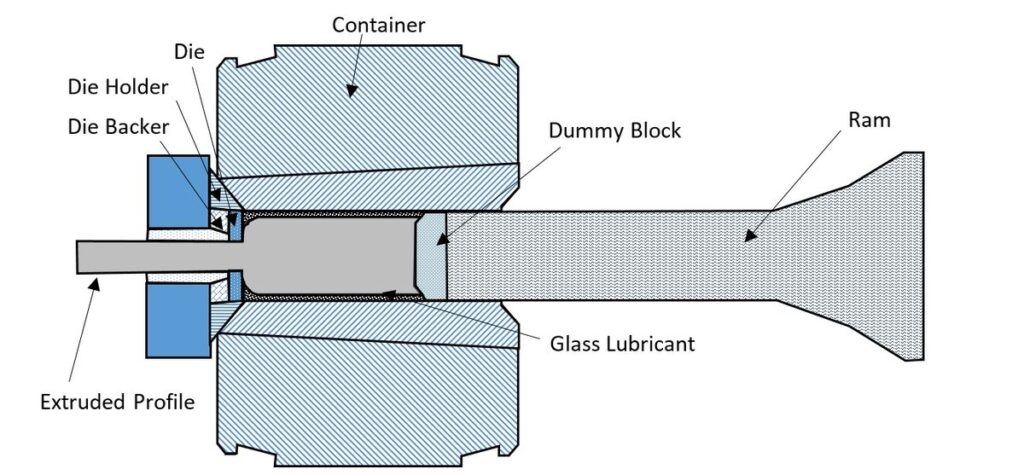
Metal extrusion is used to create lengths of metal of a fixed cross-sectional profile. Through extrusion, complex cross-sections can be created with excellent strength and surface finish. The process of aluminum extrusion works by forcing a block of metal, known as a billet, to pass through the die opening of smaller cross-sectional area than the billet itself. When the metal stock is heated and forced though the die, it is then shaped to the cross section of the die in desired lengths. This process is very accurate and produces little waste.

Metal: CNC Machining

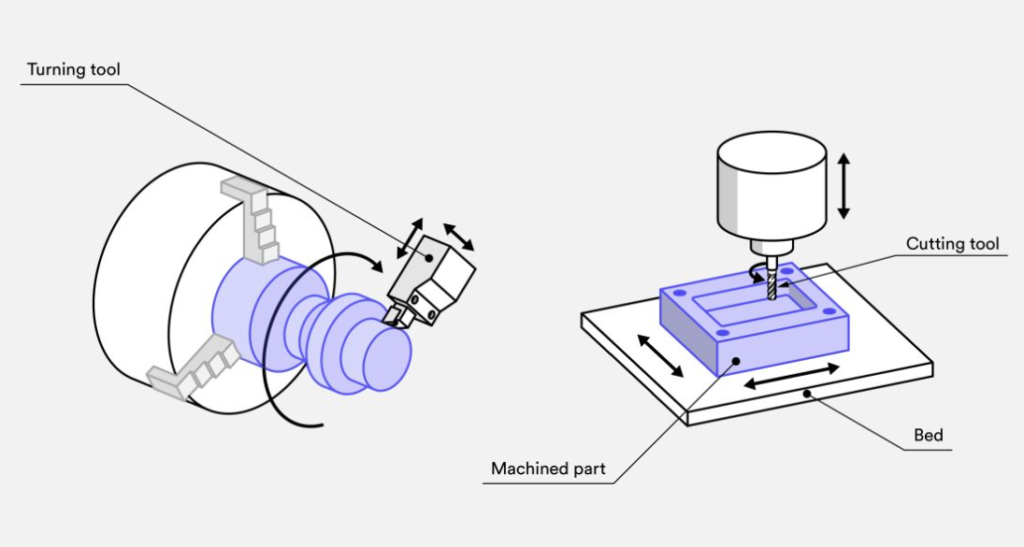
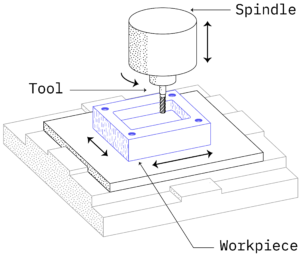
CNC Machining is a subtractive manufacturing method where in a piece of round or rectangular metal stock is started with and milled to the spec of the desired part. When working with square/rectangular stock the material is in a fixed position, usually in a vice or mounted to a jig and the platform it is on can move in the X and Y directions. The tool which is attached to the spindle can move vertically in the Z direction to cut and mill the pieces of raw material.

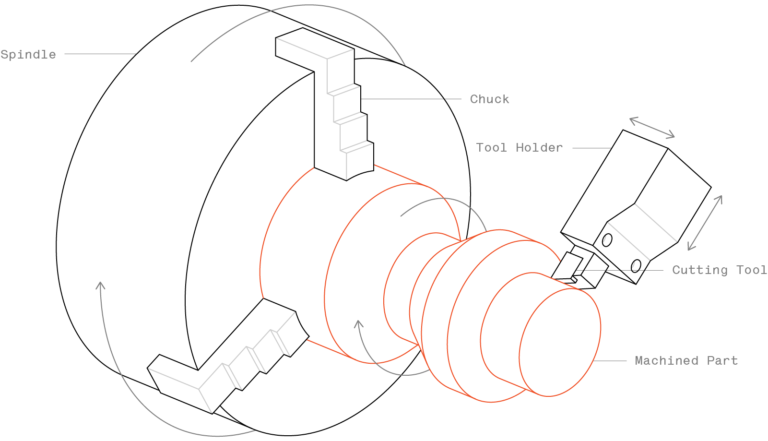
In CNC turning, the material is held in place by a chuck, which is attached to a spindle and the spindle turns the material at high revolutions per minute. The cutting tool which is stationary, then cuts and mills the turning piece of material.